
How to Build a Better Home First Aid Kit

Updated: Jul 28
A basic first aid kit is something every home should have. In fact, John Hopkins Medicine recommends keeping first aid supplies not only at home but also in your car, at work and a portable kit you can carry with you.
If you’re just starting out, that advice can feel overwhelming. Do you really need multiple kits? And what should actually go in them?
The quickest option is to buy a pre-made first aid kit. They’re convenient and usually include the bandages, antiseptic ointment, and other basic supplies you’ll use most often. For many people, that’s a great place to start.
The downside is the smaller kits often leave out items you may eventually need, while including others that you may not recognize or know how to use. They also rarely include over-the-counter medications, which many people expect to have available when someone at home is sick or injured.
A better long-term approach is to build your own kit–or start with a pre-made kit and customize it over time. Once you understand what each item is for, you can add supplies that fit your household and remove anything you don't need. The result is a first aid kit you’ll actually know how to use when the need arises.
Before we start filling a first aid kit, it helps to understand the different types. Not every kit needs the same supplies. A portable kit for your car or hiking bag will look different from the one you keep at home. In this article, we’ll focus on building a basic home first aid kit.
A quick note: This article is intended to help you prepare your home by choosing supplies to keep on hand. It is not medical advice and is not a substitute for guidance from a healthcare professional. If you have specific medical conditions, allergies, or questions about treating an illness, consult your healthcare provider. In case of an emergency, call 911 or your local emergency services immediately.
Think about Problems First.
The reason pre-made first aid kits work so well is because the manufactures organize them around common situations. They include supplies that are useful in a wide variety of circumstances.
When you are building your own kit, your perspective can be much narrower. Your goal isn’t to prepare for every possible emergency– it’s to prepare for the people who lie in your home.
Instead of asking “What should I buy?” ask “What situations am I preparing for?”

Some common categories include:
Cuts and scrapes
Minor burns
Pain and fever
Allergies
Stomach issues
Colds and Flu
Falls and minor injuries while waiting for medical care
Monitoring your health
Once you’ve identified the situations you want to prepare for, choosing supplies becomes much easier.
For example, most pre-made kits already include bandages, gauze, antiseptic wipes, antibiotic ointment, and burn gel because cuts and minor burns are common. Do you want to prepare for cold and flu season or other minor illnesses? Premade kits often leave out over the counter medications like pain relievers, antihistamines, antacids or anti-diarrheal medicine.
Some kits include items like elastic (ACE) bandages or a finger splint. These can be helpful for providing temporary support until you can be evaluated by a healthcare professional, but they aren’t found in every kit.
While not necessary, some people decide to be prepared for the emotional stress that often comes with an injury. Including a few little things like cartoon band aids, hard candy or gum can help calm the nerves of a child in your care (and sometimes an adult too). These things probably won't help anyone heal any faster, but easing stress is important.
Finally, think about whether your household would benefit from health-monitoring tools. While a thermometer is useful in almost every home, items like blood pressure monitor or an otoscope may make sense for some households but not others. Pen and paper are often overlooked too but could be handy for recording results and times so accurate information can be given to a doctor later if needed.
The best first aid kit isn’t the one with the most supplies. It’s the one that helps you respond confidently to the situations you’re most likely to face.
It’s important that every item in your kit has a purpose and that you know when and how to use it. A kit filled with unfamiliar supplies isn’t nearly as useful as one that's tailored to your household and maintained over time.
How to Organize Your First Aid Kit
One advantage of pre-made kits is that they’re easy to recognize. Most come in a bright red case with a white cross, so everyone knows where to look when they need a bandage.
The downside is that those cases are often designed to fit only the items that came in the kit. Once you start customizing it for your household, you may find there’s little room to add the supplies you actually want to keep on hand.
The good news is that your first aid kit doesn’t have to live in a special bag. Any container that keeps your supplies together can work. Before choosing one, ask yourself a few questions:
Does it close securely?
Is it sturdy enough to handle everyday use?
If you have young children, can it be stored or secured where they can’t access it?
Can you clearly label it so guests or family members can find it quickly?
Are the contents easy to see and reach without digging through everything?
A divided tackle box, a makeup organizer, or even a clear plastic storage box with a locking lid can all make excellent first aid containers. Empty first aid bags are also available if you prefer that style, but don’t feel like you need to buy one. The best container is the one that keeps your supplies organized and easy to access.
Don’t Forget About Expiration Dates
A first aid kit only works if the supplies inside are ready when you need them. Over-the-counter medications, ointments, and some sterile supplies have expiration dates that should be checked regularly.
Plan to review your kit at least twice a year. As you use items, replace them promptly, and remove anything that has expired.
Keeping track doesn’t have to be complicated. You might tape and inventory list to the lid with expiration dates, write the expiration date on each package with a permanent marker or choose from many other systems that work for you. The important thing is to find a method you’ll actually maintain.
A Final Thought:
I’ve spent a lot of time talking about the limitations of pre-made first aid kits, but I don't want that to overshadow their value. They’re an excellent place to start, especially if you've never put together a first aid kit before. They cover many of the most common situations you’ll encounter and can give you a solid foundation to build on.
Creating a well-stocked first aid kit doesn’t have to happen all at once. In fact, it can become expensive if you try to buy everything at the same time. Start with the basics, then make a list of additional supplies you’d like to keep on hand. As your budget allows, add items that fit your household’s needs. As you pick up new items, take the time to familiarize yourself to when and how they should be used.
Remember, the goal isn’t to own every first aid supply available. It’s to be prepared for the situations you’re most likely to face and to know where your supplies are when you need them.
Your first aid kit doesn’t have to be perfectly organized or packed into an expensive case to be useful. If it helps you respond more calmly and confidently during a stressful or unexpected situation, then it’s doing exactly what it was designed to do.
P.S.
If you’d like a place to start, download the Steady Home Toolkit: Home First Aid Inventory. It includes:
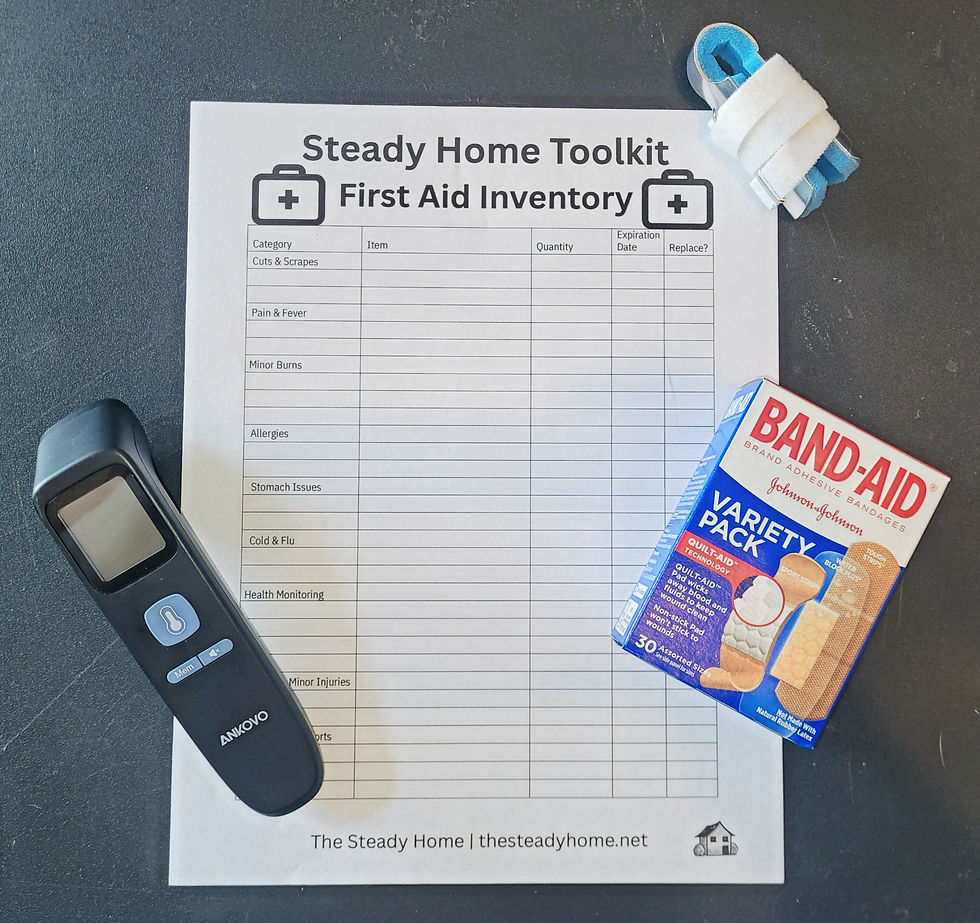
Categorized inventory worksheet
Blank inventory page
Sample completed inventory
This download is free for personal, non-commercial use. Feel free to use it as-is, customize it to fit your household or simply use it as inspiration for creating your own system. The important thing isn’t how you track your supplies–it’s having a system you can keep up with.
Preparing ahead of time won’t eliminate every stressful moment, but it can make those moments a little less overwhelming.



Comments