
How to Read Food Labels

Updated: Jul 23
Don't let the packaging fool you - Quick guide to reading Food labels.
Most of us are never taught how to read nutrition labels. So we rely on marketing instead. Words and phrases like natural, whole grain, high protein, or made with real fruit grab our attention, but the nutrition label tells a much more complete story. Food labels don't tell you what to buy - they give you the information you need to decide for yourself.
Learning to read the little box on the back of the package can help you compare products and make choices that fit your own health goals. You don't need to memorize every vitamin or become a dietitian. You just need to know where to look.
In this guide, we'll look at five things on every nutrition label:
Once you know these five areas, you'll be able to compare products in just a minute or two.
Here are two labels for two cans of soup:
If you are just looking at the packaging, you might think that the one with higher protein is the better option. But is it?
1) Check the Serving Size


Both soup cans show one serving equals one cup. Everything else on the nutrition label is based on serving size. Before comparing two foods, make sure you're comparing the same amount of food.
Ask yourself: "Am I likely to eat one serving, or the whole package?"
It's important to note that both labels show there are two servings per container. This is important because not many people will split a can of soup with another person or save half for later. Some nutrition labels now include a second column that shows the nutrition for the entire package, making it easier if you're likely to eat the whole container.
Everything on the nutrition label is based on serving size. Check this first.
2) Calories are just One Piece of the Puzzle
Calories are a measurement of energy. They don't tell you how filling or nutritious your food is.
Looking at our two soups, one has more calories than the other. That doesn't automatically make it better - or worse. Those extra calories could come from more protein, more carbohydrates, or more fats. Calories are just a piece of the picture.
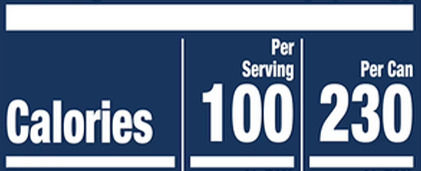

If two similar products have a large difference in calories, ask why. Is one higher in protein? More healthy fats? Or just added sugar? Calories are a starting point - not the final answer.
You'll notice many nutrition labels mention a 2,000-calorie diet. This is the simple standard reference the FDA uses to calculate % Daily Value. Your own calorie needs may be higher or lower depending on your age, activity level, and health needs.
Calories tell you how much energy is in a food – not how healthy it is.
3) Look at the Nutrients
This is where things get a little tedious, especially if you don't have a background in food science or general health. Let's break it down.
Remember: this is just an overview. If you have specific questions about your needs, please bring them up the next time you see your doctor.
Nutrient | Why it Matters |
|---|---|
Saturated Fat | Body needs fat, but eat in moderation |
Sodium | Easy to eat more than you think |
Fiber | Helps you stay full longer |
Added Sugar | Added for flavor or shelf life – not nutrition. Limit added sugars when possible |
Imagine you're in the store and you have to choose between two cans of soup. They cost the same and taste similar, but one has 25% of your daily value of sodium, while the other has 40% DV. The lower-sodium option may be a better fit for most people.
You don't have to memorize every nutrient. Focus on the few that matter most to you.
4) % Daily Value (%DV)


So now you know the exact amount of each nutrient listed on the nutrition label. How can you quickly make a decision while standing in the grocery store? The % Daily Value (%DV) is where you can look for a quick reference.
What is %DV?
Daily Value (DV) is the recommended amount of a nutrient to consume, or the maximum amount to limit, for an average day. % Daily Value (%DV) tells you how much of that daily recommendation is found in one serving of a food.
At a quick glance, 5% DV or less is low, and 20% DV or more is high. Some nutrients you want more of, and some you want less. That's why the percentage by itself isn't "good" or "bad." It depends on the nutrient you're looking at and your individual needs.
Which nutrients should I compare?
Usually Look For Lower | Usually Look For Higher |
|---|---|
Saturated Fat | Fiber |
Sodium | Calcium |
Added Sugar | Vitamin D |
Iron | |
Potassium |
Marketing claims should match what you see on the Nutrition Facts Label. If it's marketed as light, low, or reduced, you would expect the %DV to be smaller than the comparable product. What is that comparable product? That's a little tricky; sometimes it's a previous version of the same product by the same company. Sometimes they are compared to competitors. You have to read the advertisement carefully to figure that out.
5) Ingredients Matter Too
Ingredients are listed by weight. If you are comparing two similar products with similar nutrition labels, the ingredient list can break the tie.
The first few ingredients make up most of the product. If sugar is one of the first ingredients in a protein bar, that should tell you something about that bar. If whole oats are first, that tells you something different. Don't worry if you can't pronounce every ingredient. Pay attention to the first few ingredients since they make up the bulk of the product.
Put it all Together
Let's compare our two soups one last time.
Serving size: Same.
Calories: One is slightly Lower.
Nutrients: One has more protein. One has less sodium.
Ingredients: Both contain chicken, noodles, and vegetables.
Now ask yourself:
Which nutritional goal matters most to me?
Am I trying to eat more protein?
Cut back on sodium?
Stay fuller longer?
Save money?
There isn't a "correct" answer, and your answer will probably change in different seasons of your life. Reading nutrition labels isn't about finding the perfect food. It's about learning to ask better questions. Instead of asking "Is this healthy?" you can ask "Compared to what?" or "Does this accomplish my needs?"
A Final Thought
You don't have to read every label in your cart. There are some items that you are going to buy because they are good for more than your health. You don't need the healthiest ice cream to comfort you on a bad day. You may be trying to introduce fiber or other new foods into your diet, and the fact that instant oatmeal contains oats is more important than how much sugar it has. The important thing is to be aware of what you are putting into your body. When you know how to read a nutrition label, you will be able to make the decision on your own, and you won't be tempted to rely on an advertising company to make health decisions for you.
Food is more than nutrition. It's part of celebrations, traditions, comfort, convenience, and sometimes just getting dinner on the table after a long day. The goal isn't perfection - it's understanding. Once you know how to read a nutrition label, you are making informed choices instead of relying on the marketing on the front of the package.
30 Second Checklist:
Compare serving sizes
Look at the calories
Use %DV as a quick guide for saturated fat, sodium, fiber, and added sugar
Read the first few ingredients
Then you can decide if this product fits your goals – not just the claims on the front of the package.
Disclaimer
This guide is intended for general education and is not medical advice. Everyone's nutritional needs are different. If you have a medical condition, food allergy, or have been given a specific diet by your healthcare provider, follow their recommendations. Never ignore a physician's advice or delay seeking care because of something you read here or anywhere else on the internet.



Comments